Key takeaway: For HVAC, plumbing, electrical, and roofing businesses, online reputation is now a primary lead generation channel. Homeowners check Google reviews before calling a contractor, and businesses with strong, recent review profiles consistently win more jobs. This guide covers how to collect reviews, respond to negative feedback, avoid common compliance mistakes, and build a reputation system that generates leads on autopilot.
Why Reputation Management Matters More for Home Services Than Almost Any Other Industry
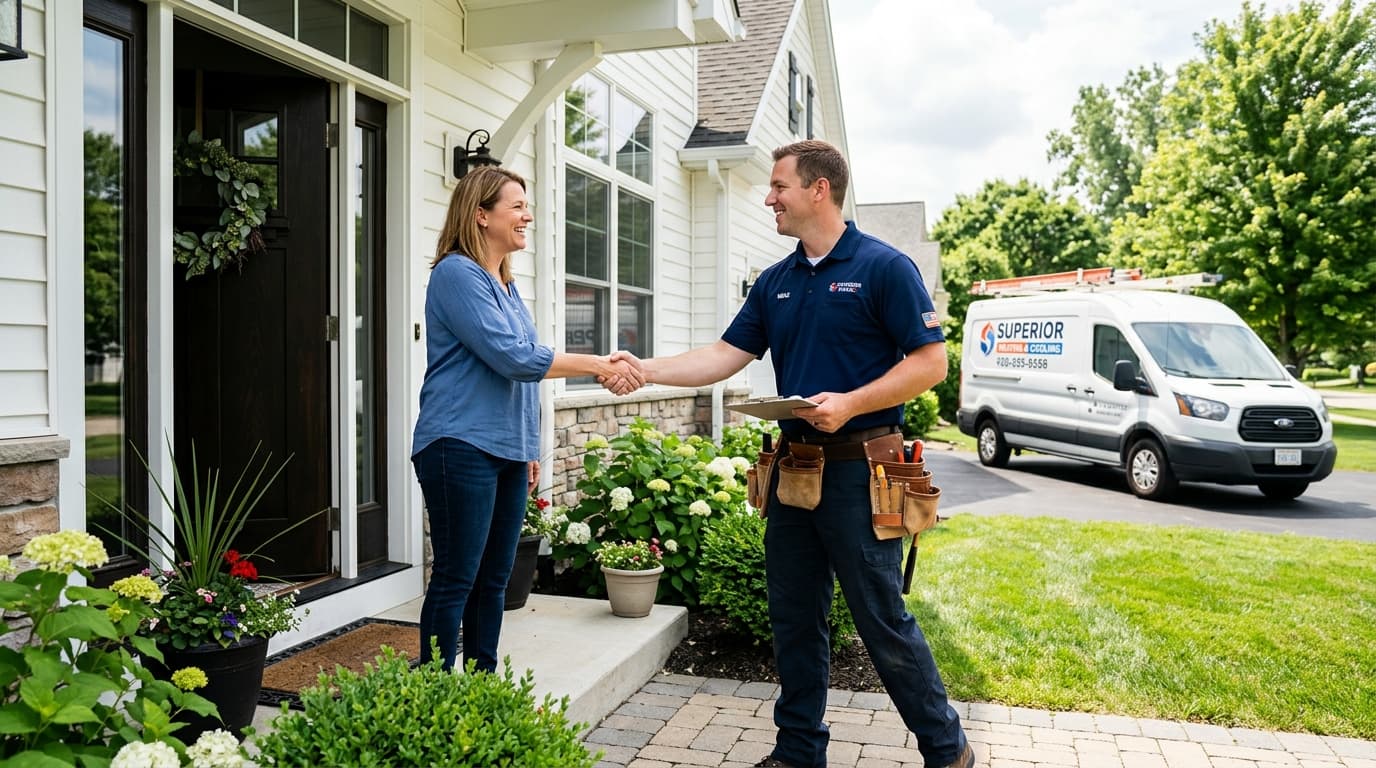
When a homeowner's furnace fails in January or a pipe bursts at midnight, they do not browse ten websites comparing pricing tiers. They open Google Maps, glance at star ratings, scan the most recent reviews, and call the first business that looks trustworthy. Your online reputation is the decision point between getting that call or losing it to the contractor listed below you.
Home services are uniquely reputation-sensitive for three reasons: customers are often in urgent situations with limited time to research, the work happens inside their home (which requires significant personal trust), and the cost of a bad hire ranges from hundreds to thousands of dollars. A strong review profile addresses all three concerns before the phone even rings.
How Many Reviews Do You Actually Need?
There is no magic number. What matters most is consistency and recency. A plumbing company with 40 reviews—most from the last three months—will generally outperform a competitor with 200 reviews that stopped accumulating a year ago. Google's algorithm and consumer behavior both favor businesses that are visibly active and currently serving customers.
| Review Profile | Consumer Perception | Local Search Impact |
|---|---|---|
| Fewer than 10 reviews | Low trust — homeowners keep scrolling | Unlikely to appear in local map pack |
| 10–50 reviews, mostly recent | Growing credibility | Competitive for less saturated markets |
| 50–150 reviews, steady monthly flow | Strong trust signal | Consistently competitive in local search |
| 150+ reviews with ongoing collection | Established market leader | Dominant in local map pack for service area |
Focus on earning a steady stream of reviews each month rather than running a one-time campaign. A consistent review velocity signals to Google that your business is active and currently serving customers.
When and How to Ask for Reviews After a Service Call
Timing is the single biggest factor in review conversion. The ideal window is within one to two hours after the technician completes the job. At that point, the customer has seen the result, the interaction is still fresh, and gratitude is at its peak. Wait until the next day and completion rates drop significantly.
The Best Review Collection Methods for Field Service Teams
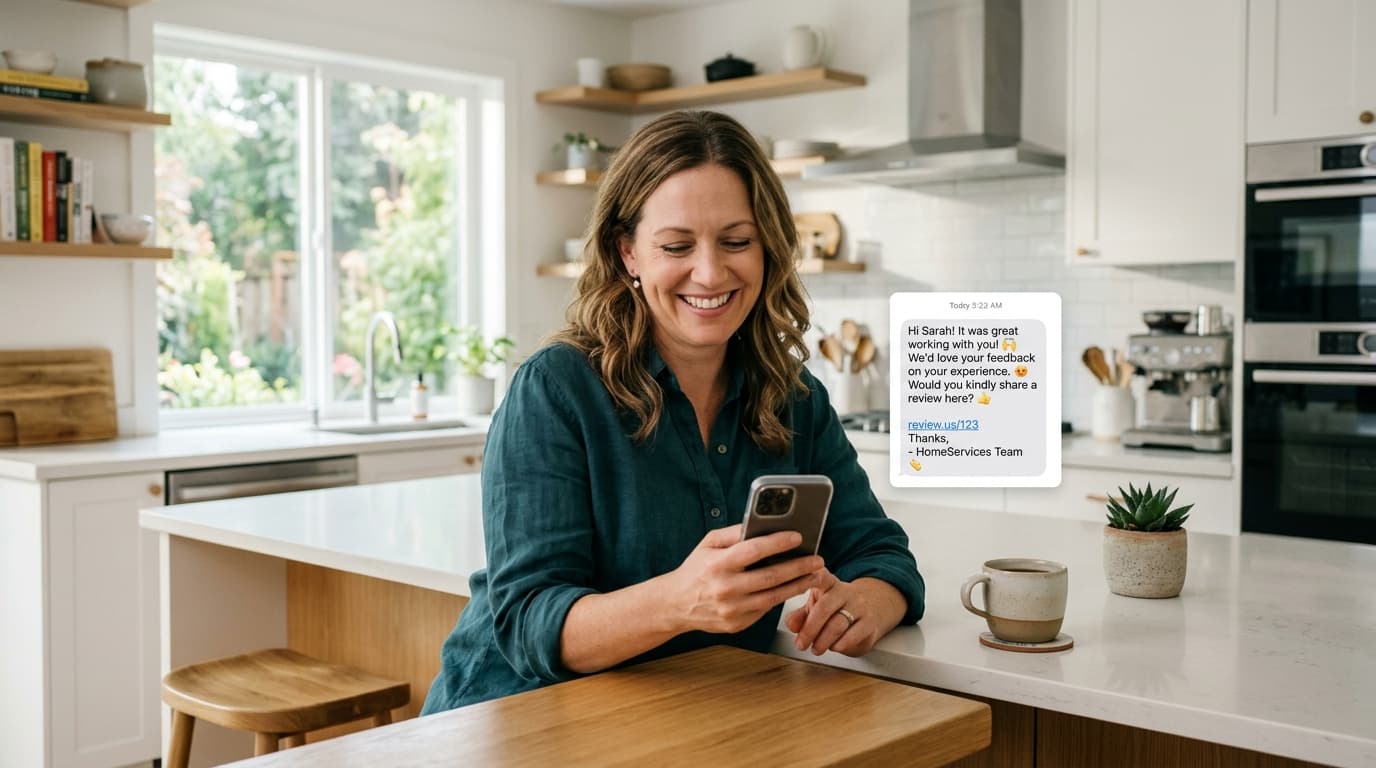
- **Automated SMS after job completion:** Integrate your scheduling or dispatch software with an automated review request tool. When a technician marks a job complete, the customer receives a friendly text with a direct Google review link within the hour.
- **Technician mention at wrap-up:** A brief, unpressured mention works well: 'If you were happy with the work today, a Google review really helps our small business.' Keep it casual—never push or offer incentives.
- **QR codes on invoices and leave-behinds:** Print a QR code linking to your Google review page on paper invoices, maintenance stickers, or branded fridge magnets. Customers can scan it later at their convenience.
- **Email follow-up for larger projects:** For major installations (new HVAC systems, full re-pipes, roof replacements), send a follow-up email three to five days later with a review request and a link to your Google profile.
How to Respond to Negative Reviews as a Contractor
Negative reviews are inevitable in home services. Equipment fails, appointments run late, and miscommunication happens. What separates top-performing contractors from the rest is not the absence of bad reviews—it is how they respond. A thoughtful, professional reply often convinces prospective customers more effectively than a wall of perfect 5-star ratings.
Response Template for Home Service Businesses
'Thank you for your feedback, [Name]. We take punctuality and clear communication seriously on every service call, and we are sorry your experience did not reflect that standard. We would like to look into this and make it right. Please call our service manager directly at [phone] or email [email] so we can discuss the details privately.'
- **Respond within 24 hours.** Speed signals that you care and are paying attention.
- **Acknowledge without arguing.** Never dispute facts publicly, even when the customer's version feels inaccurate.
- **Move the conversation offline.** Provide a direct phone number or email to resolve the issue privately.
- **Keep it short.** Two to four sentences is enough. Long, defensive responses draw more attention to the complaint.
- **Never share job details publicly.** Quoting prices, describing damage, or referencing contracts in a public reply creates more problems than it solves.
Compliance: What Home Service Businesses Cannot Do
Google and the FTC have clear rules about review collection. Violating them can result in review removal, profile restrictions, or regulatory fines. Here are the most common compliance mistakes in home services:
| Practice | Allowed? | Why |
|---|---|---|
| Asking satisfied customers for a review | ✅ Yes | Requesting honest feedback is permitted |
| Sending an automated text with a Google review link | ✅ Yes | As long as the customer previously consented to texts |
| Offering a $25 discount for leaving a review | ❌ No | Incentivizing reviews violates Google and FTC guidelines |
| Asking only happy customers to post reviews (review gating) | ❌ No | All customers must have equal access to the public review option |
| Asking technicians to leave reviews for your own company | ❌ No | Employee reviews violate Google's conflict of interest policy |
| Responding to reviews with job-specific pricing details | ⚠️ Risky | Can violate customer privacy and create legal exposure |
As of 2026, Google has tightened enforcement against review manipulation. Practices including on-premises review kiosks, incentivized reviews, and asking customers to use specific keywords are explicitly prohibited and can lead to profile restrictions.
Google Business Profile Optimization for Contractors
Your Google Business Profile is the foundation of your local search presence. An incomplete or outdated profile hurts your visibility regardless of how many reviews you collect. Treat it as your digital storefront and keep every field accurate and current.
- **Service categories:** Select your primary trade (e.g., 'HVAC contractor', 'Plumber', 'Electrician') and add secondary categories for specific services you offer (e.g., 'Air conditioning repair service', 'Water heater installation service').
- **Service area:** Define your geographic coverage accurately. Do not set an unrealistically large radius—Google ranks you lower for searches outside your actual service area.
- **Business hours and special hours:** Keep hours accurate, especially during holidays, extreme weather events, or seasonal changes. If you offer 24/7 emergency service, make sure that is reflected.
- **Photos:** Upload recent photos of your team, wrapped vehicles, completed projects, and clean workspaces. Profiles with photos receive significantly more engagement than those without.
- **Business description:** Write a clear, factual description of your services, service area, and specialties. Include your primary trade and location naturally.
Industry-Specific Challenges and Solutions
HVAC Companies
HVAC businesses face extreme seasonal demand swings. During summer cooling and winter heating peaks, technicians run six to eight calls per day with little time for follow-up. The solution: fully automated post-job review requests triggered by your dispatch software. Capture reviews during peak season when job volume is highest and customer urgency creates natural gratitude.
Plumbing Companies
Emergency plumbing calls often happen during stressful moments—flooded basements, broken water heaters, backed-up drains. Customers who were in crisis mode during the call may not feel inclined to write a review once the stress passes. Send the review request while the relief of resolution is still fresh, ideally within an hour of the repair.
Electrical Contractors
Electricians often work on projects that homeowners cannot visually evaluate—panel upgrades, rewiring, or code compliance work. Customers may hesitate to review because they feel unqualified to judge the quality. Your review request message can address this directly: 'How was your experience with our team?' focuses on the service interaction rather than technical expertise.
Roofing Companies
Roofing projects have the longest sales cycles and highest price points in home services. Customers invest significant trust and money, making their reviews especially detailed and persuasive to future buyers. Send a review request after the final walkthrough—not after the initial estimate or midway through the project.
Building a Reputation System That Runs Without You
The most successful home service companies treat reputation management as a system, not a task. The goal is a repeatable process where reviews flow in consistently, negative feedback is caught early, and responses are handled promptly—without the owner manually managing every interaction.
Zyene Reviews helps home service businesses automate this entire workflow: trigger personalized review requests via SMS or email after every completed job, route unhappy customers to a private feedback channel before they post publicly, monitor new reviews across Google and other platforms in real time, and respond quickly with AI-assisted reply drafts that you review before publishing.
See How Zyene Reviews Works for Home Services →
Get Started