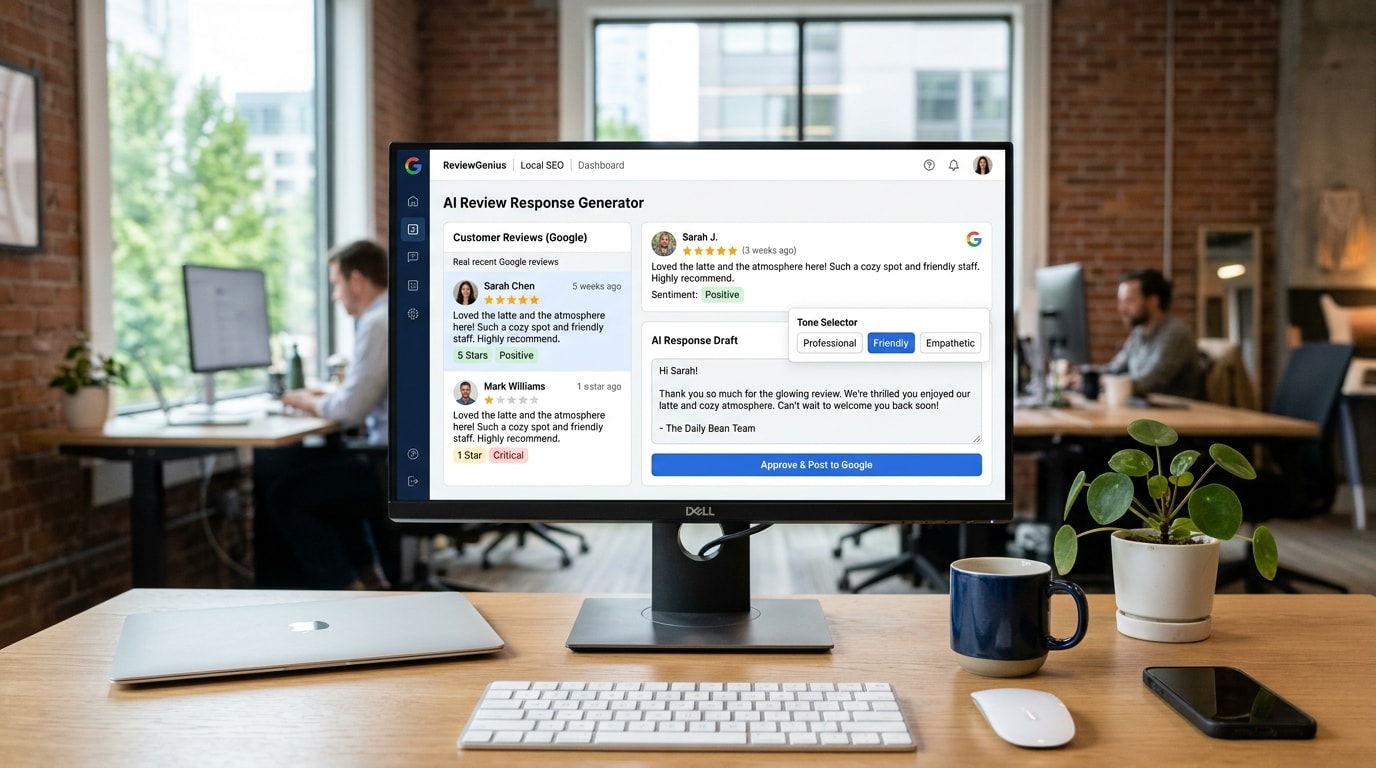
Key takeaway: Direct Answer: The best local SEO software stack for small businesses in 2026 combines foundational free tools (Google Business Profile and Search Console) with specialized geo-grid rank trackers (Local Falcon) and automated review management platforms (Zyene Reviews). This setup secures top Google Map Pack rankings, protects reputation with private feedback loops, and structures business data for generative AI search engines.
Claiming your Google Business Profile and verifying consistent Name, Address, and Phone (NAP) citations across the web remains the prerequisite for local discoverability. With Gartner predicting a 25% drop in traditional search traffic as AI chatbots and answer engines reshape local recommendations, small businesses need lean, high-utility tools that maintain data accuracy and drive actual customer bookings.
1. Core Comparison: 2026 Local SEO Software Matrix
| Platform | Best For | Strongest Advantage | Main Trade-Off |
|---|---|---|---|
| Zyene Reviews | Review Automation & Map Pack SEO | Automated SMS/NFC triggers & private feedback shield | Focused strictly on reputation & local growth |
| Google Business Profile | Foundational Map Visibility | Free, direct algorithmic search presence | Manual management and no automated follow-up |
| Local Falcon | Neighborhood Proximity Tracking | Visual geo-grid ranking heatmaps | Credit-based pricing model |
| BrightLocal | Agencies & Multi-Location Audits | Comprehensive citation and reputation reports | Cost scales significantly with location count |
| Moz Local | Aggregator Citation Distribution | Automated push to major data aggregators | Limited local rank tracking in starter tiers |
| Whitespark | Manual Niche Citation Cleanup | Deep industry-specific citation building | Modular tools sold as separate purchases |
2. Why Review Management is the Foundation of Local SEO
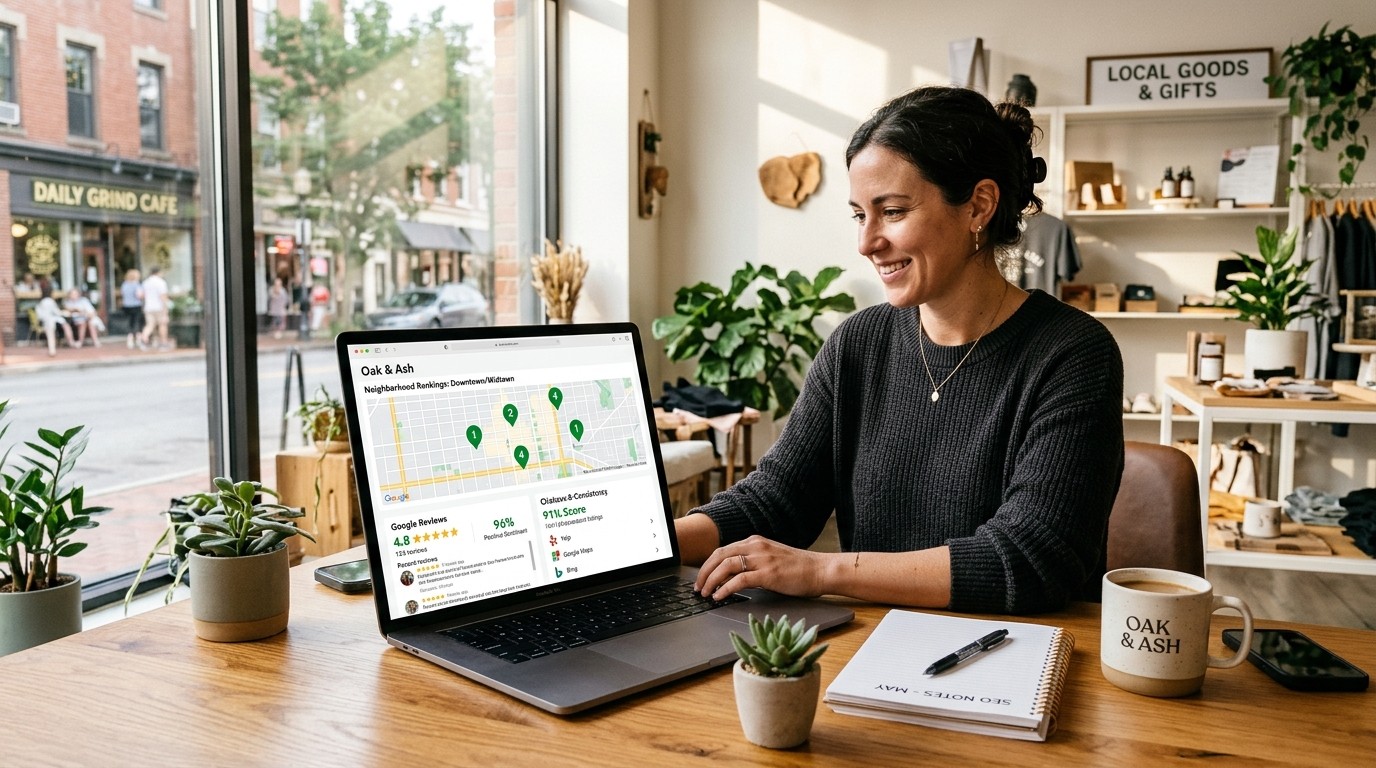
High map rankings are meaningless if a listing displays outdated or mediocre ratings. Over 88% of consumers trust online reviews as much as personal recommendations, making Google reviews your primary conversion mechanism. Review velocity—the steady stream of verified new customer reviews—signals freshness and operational activity to Google's ranking algorithms. Platforms that include private feedback paths protect your rating by resolving complaints before they escalate to public one-star reviews.
3. Visualizing Proximity with Grid-Based Rank Tracking
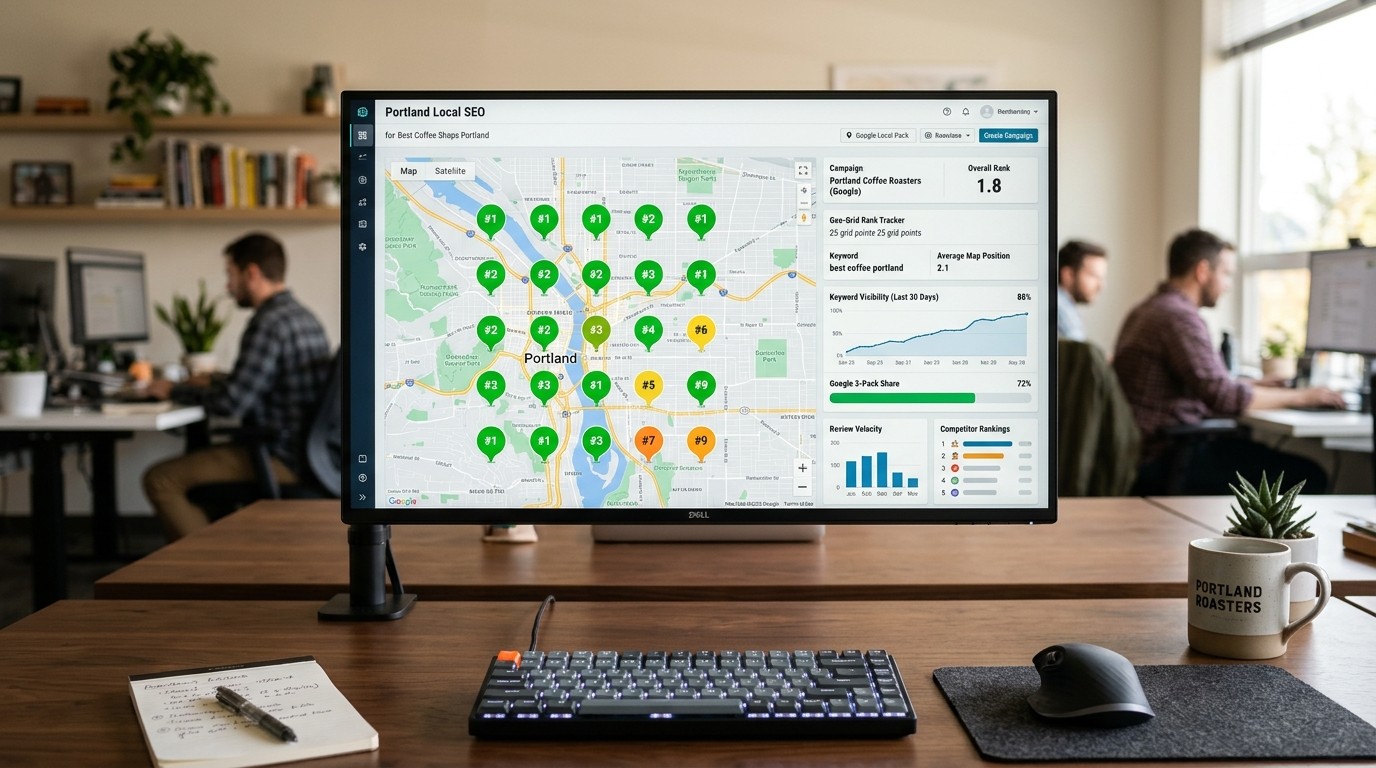
Traditional rank trackers report a single average position across an entire municipality, masking the reality of local search. The Google Local 3-Pack captures over 33% of all local search clicks and changes every few hundred yards based on user proximity. Grid-based rank trackers like Local Falcon and BrightLocal place virtual GPS pins across your neighborhood, revealing exactly where your business dominates the 3-Pack and where visibility drops off.
4. Maximizing the Free Google Ecosystem: GBP, GSC & GA4
Before investing in expensive third-party suites, small business owners must fully optimize the free Google toolset. Google Business Profile controls your primary business attributes, service hours, and product catalogs. Pairing it with Google Search Console reveals the exact non-branded search queries triggering your listing, while Google Analytics 4 tracks high-intent conversion actions like phone calls and driving direction requests.
5. Cleaning Up Your Digital Footprint: Citation & NAP Sync
Conflicting phone numbers or old addresses across third-party directories dilute search engine trust. Moz Local automates NAP distribution to the primary data aggregators (Data Axle, Neustar Localeze, Foursquare), while Whitespark excels at identifying high-value, industry-specific niche directories. Maintaining unified NAP data provides the authoritative baseline needed to rank in both traditional search and generative AI answer engines.
6. Leveraging AI for Local Content & Authority
Generative AI search engines favor businesses that provide clear answers to hyper-local search intent. AI tools help small business owners draft localized service descriptions, generate geo-targeted FAQ schemas, and maintain rapid review response rates. Automating thoughtful review responses signals active management to Google's algorithms while freeing operational teams from tedious administrative chores.
7. Advanced Competitor Intelligence & Keyword Gaps
With 'near me' searches surging over 500% in recent years, analyzing competitor keyword gaps reveals untapped service categories and suburban neighborhoods where rivals hold weak rankings. Comprehensive SEO tools like Ahrefs help identify high-converting local keyword clusters that can be targeted through dedicated service pages and Google Business Profile updates.
8. Selecting Your 2026 Local SEO Stack: Step-by-Step
- **Audit NAP Citations:** Identify and resolve conflicting business names, addresses, and phone numbers.
- **Deploy Geo-Grid Tracking:** Use Local Falcon or BrightLocal to map your neighborhood 3-Pack radius.
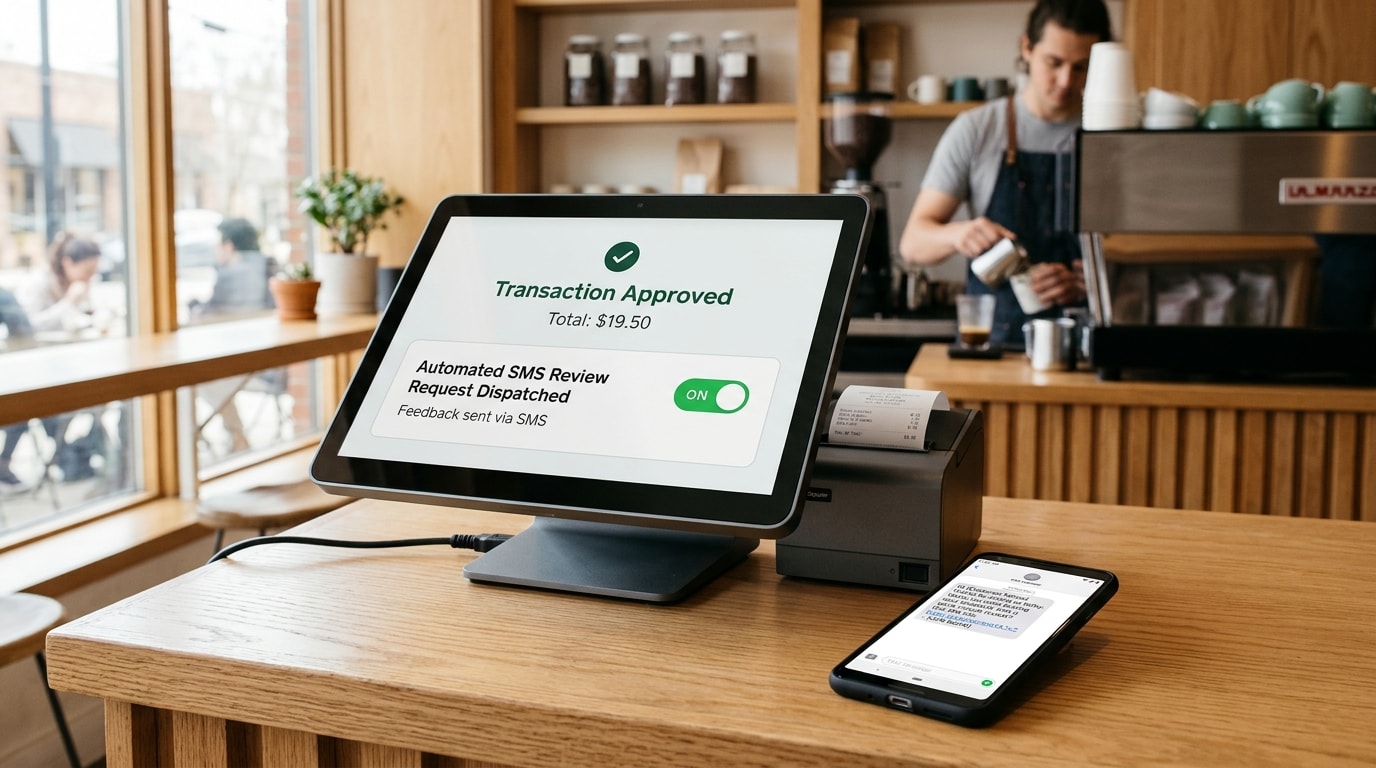
- **Automate Review Collection:** Implement POS or SMS triggers to capture customer feedback at peak relief.
- **Shield Against Negative Reviews:** Use a private feedback loop to intercept service friction internally.
- **Optimize for AI Engines:** Maintain structured, consistent business data across all directories.
Boost Your Local Search Rankings with Zyene Reviews →
Get Started